

In summary: The rise of AI-powered "vibe coding" tools has resulted in an astonishing 84% increase in new app submissions to Apple's App Store within a single quarter. This surge, the most significant in a decade, is testing Apple's review capabilities, with approval times stretching from the usual 24 hours to as many as 30 days. In response, Apple has started to remove apps that do not comply with its self-containment rules, leading to tensions with the platforms behind this trend.
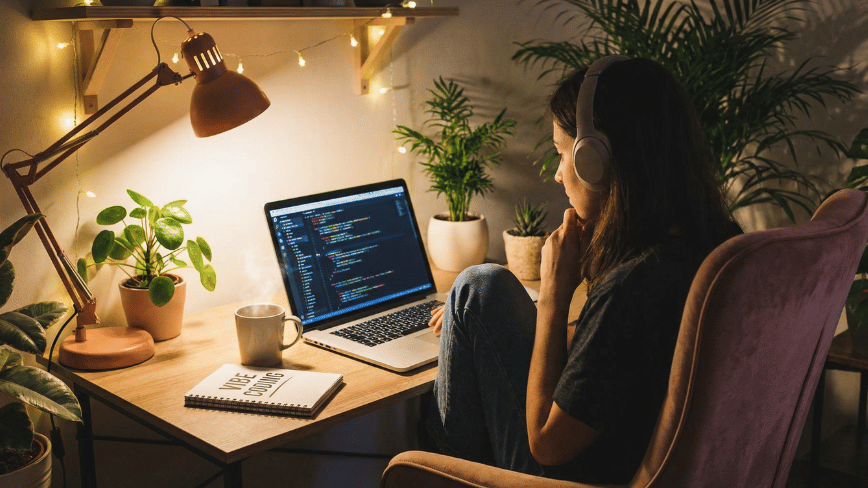
Currently, the Apple App Store is witnessing a record number of new app submissions, attributed not to an influx of professional developers but to the concept of vibe coding. This term, coined by Andrej Karpathy, a co-founder of OpenAI, has garnered attention as it allows users to create software by simply describing their ideas in plain language, which a large language model then translates into code. This innovation has dramatically lowered the barriers to app development, overwhelming the existing infrastructure Apple has established for its platform.
Reports indicate that the number of new apps submitted to the App Store surged by 84% in a single quarter as vibe coding gained traction. This increase aligns with broader statistics from Sensor Tower, which noted a 56% year-on-year rise in iOS app launches in December 2025 and a 54.8% increase in January 2026, marking the highest growth rates in four years. In total, Apple recorded 557,000 new app submissions for the entire year of 2025, the largest annual influx since 2016.
The Drivers of the Surge
The remarkable increase in submissions is largely due to a small group of platforms that have transformed natural language into actionable software. For instance, Cursor, developed by Anysphere and utilized by seven million developers, achieved over $2 billion in annual revenue by March 2026 and was valued at $29.3 billion after a notable funding round. Similarly, Lovable, aimed at non-technical users, experienced a fiftyfold revenue surge, reaching $200 million, and raised $330 million in a Series B funding round at a $6.6 billion valuation. Replit, another player, reported $240 million in revenue for 2025 and aims for $1 billion in 2026.
The appeal of these platforms is clear: they enable anyone with an idea and internet access to create and submit an app. However, this dynamic poses significant challenges for Apple, as the very characteristics that make vibe coding appealing conflict with the App Store's review process.
Apple's Structural Dilemma
The strength of vibe coding stems from its ability to generate and execute new code on demand, responding to user inputs in real time, without relying on a fixed codebase. In contrast, Apple’s App Store review process was designed for a static model where developers submit a complete build for review, and users receive the approved version. According to Guideline 2.5.2 of Apple’s App Review Guidelines, apps are prohibited from downloading or executing code that alters features post-review, which is precisely what vibe coding apps do.
The impact of this volume surge is evident in Apple's infrastructure. Developers reported review delays of seven to 30 days in March 2026, compared to the typical 24 to 48-hour timeframe, with much of the delay occurring while submissions await review. The influx of AI-generated apps has stressed a system built for a time when app development was a lengthy process.
Initiating Crackdowns
Apple's enforcement actions have been gradual and at times unclear. In mid-March 2026, reports surfaced that the company had begun to block updates for a range of vibe coding apps, including Replit and Vibecode, without prior notice. Developers received rejection notices citing Guideline 2.5.2 but were not warned about the tightened enforcement.
One of the most affected apps was Anything, which allowed users to create small tools through natural language prompts. Its co-founder, Dhruv Amin, revealed that Apple had prevented updates since December 2025 and eventually removed the app entirely on March 30, 2026. Despite Amin's efforts to modify the app to comply with Apple's guidelines, the update was blocked, leading to the app's removal.
An Apple spokesperson clarified that the company is not targeting vibe coding per se, but is enforcing guidelines to prevent apps from changing behavior post-review. Nonetheless, this distinction is narrow, as vibe coding's core function is to generate and execute new features dynamically, directly contradicting Guideline 2.5.2.
Counterarguments to Apple's Stance
This situation reflects a broader tension regarding gatekeeping economics. Apple's App Store review process not only serves as a safety measure but also underpins the 15-30% commission the company earns from in-app purchases. A wave of vibe-coded apps that can generate code outside the approved bundle challenges the foundational business logic of the store. Regulatory scrutiny, particularly under the Digital Markets Act in Europe, is further complicating Apple's gatekeeping authority.
A Moment of Reckoning for Platforms
The emergence of vibe coding has revealed a significant mismatch between the rapid pace at which AI can generate software and the speed at which Apple's review infrastructure can assess it. Apple was processing around 200,000 app submissions weekly at the peak of its 2025 volume, but this surge has exceeded that capacity. Apple now faces a pivotal decision: either significantly enhance its review capabilities, revise its guidelines to allow for controlled dynamic code execution, or maintain current rules and endure the friction created with a burgeoning class of developers.
With substantial investment flowing into AI infrastructure in 2026, the volume of vibe-coded apps is unlikely to decline. The tools are evolving to be faster and more cost-effective, and this sector is producing some of the fastest-growing companies in technology. As AI transitions from a novelty to a crucial commercial resource, the question of who controls the distribution framework and under what conditions is becoming the focal point of the ongoing platform debate. The App Store was initially designed to address this issue, but vibe coding is prompting Apple to reevaluate its approach. The AI-driven revolution of 2025 is at the threshold, and Apple must decide whether to embrace it.
Source: TNW | Apple News