
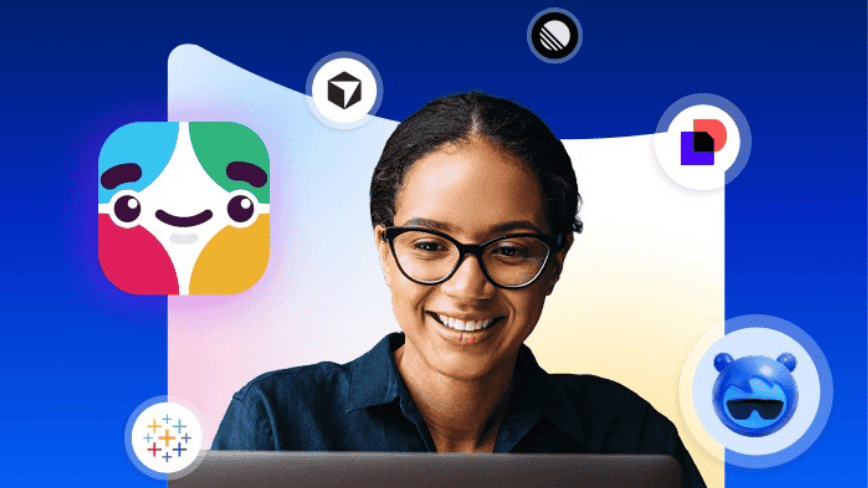
In brief: On March 31, 2026, Salesforce announced the release of over 30 new AI capabilities for Slackbot, representing the most extensive update since its $27.7 billion acquisition in 2021. This transformation elevates Slackbot from a simple conversational assistant to a more autonomous system capable of transcribing meetings on various video platforms, monitoring desktop activity, executing tasks via the Model Context Protocol, and serving as a lightweight CRM. These enhancements are powered by Anthropic's Claude and are available now to Business+ and Enterprise+ users, with a limited rollout to free and Pro users beginning in April. Additionally, starting summer 2026, every new Salesforce customer account will include Slack automatically.
At an event held in San Francisco, CEO Marc Benioff revealed that the Slackbot upgrade aims to create what Salesforce describes as an "agentic operating system"—a unified interface where employees can engage with AI agents, enterprise applications, and each other. This announcement builds on earlier updates from January 2026 that introduced capabilities for drafting emails, scheduling meetings, and searching inboxes. The latest features are significantly more comprehensive.
Overview of New Features
The highlight of the update is the introduction of reusable AI skills. Users can create workflows, such as "summarize this campaign brief" or "generate a budget plan for this event", and save them as skills. Slackbot learns to recognize when these tasks are initiated, offering to execute the skill automatically by gathering pertinent information from connected channels and applications without requiring user intervention each time. This reflects a growing expectation in enterprise software that AI should automate repetitive cognitive tasks without manual configuration.
Another significant feature is meeting intelligence, allowing Slackbot to listen to calls on platforms like Zoom, Google Meet, or Slack Huddles by accessing desktop audio through its application. It goes beyond transcription by identifying decisions made during meetings, assigning action items to participants, and generating a structured summary after the call concludes. This desktop agent broadens Slackbot's functionality, enabling it to monitor screen activity and leverage user data to provide proactive suggestions and draft follow-up messages. However, this raises privacy concerns as it requires users to grant the AI persistent access to their computers.
Slack is also introducing a built-in CRM tailored for small businesses, which operates directly within the chat interface. Slackbot can read channels, recognize deal mentions, or new contacts, and automatically update records. Salesforce assures that companies scaling up can transition to the full Salesforce CRM seamlessly. Moreover, Slackbot now serves as a Model Context Protocol (MCP) client, which means it can connect and coordinate with any external service that registers as an MCP server through Slack’s manifest. This includes popular services like Agentforce, Google Workspace, Microsoft 365, Notion, Workday, ServiceNow, and over 6,000 other applications in the Salesforce ecosystem. This shift towards agent orchestration—where a unified interface manages multiple AI systems across various enterprise applications—is shaping the competitive landscape in enterprise software for 2026.
Technology Behind the Upgrade
All new functionalities of Slackbot operate on Anthropic's Claude. Salesforce chose Claude due to its compliance with FedRAMP Moderate certification requirements, necessary for servicing regulated industries such as government, healthcare, and finance. The partnership with Anthropic marks a significant deployment of Claude within a major productivity platform, and Salesforce indicates that Slackbot already has close to one million weekly active users—a figure expected to rise dramatically due to the new pricing and bundling strategies.
Strategic Context
The March 31 event was notably led by Marc Benioff, highlighting the importance of Slack's transformation in Salesforce's strategy. A notable context for this event is the departure of Denise Dresser, Slack’s CEO since 2023, who left to join OpenAI as its first chief revenue officer. Rob Seaman, the former chief product officer, currently serves as the interim CEO following Dresser’s exit. This leadership change, particularly with Dresser moving to a competitor, adds an intriguing layer to Salesforce's ambitious product developments.
Facing Microsoft
The introduction of these 30 new features can be seen as a direct competitive response to Microsoft, which has been integrating AI extensively across its 365 productivity suite, embedding Copilot functionalities into its Teams, Word, Excel, Outlook, and PowerPoint applications. Slack's strategy, articulated through the "agentic operating system" concept, positions a communication-centric interface with extensive enterprise integration as a superior environment for AI agents compared to a document-centric approach. The credibility of this argument has strengthened with the addition of these new capabilities.
Pricing and Availability
Slackbot is included in Business+ and Enterprise+ plans without additional costs. Starting in April 2026, a limited version will be accessible to users on Slack’s free and Pro plans. The more notable change occurs this summer when every new Salesforce customer will automatically receive an AI-enabled Slack account upon sign-up. This bundling means that enterprise buyers won’t have to consider the cost of a separate AI layer, as it will come included with their CRM purchase.
The prevailing expectation in 2026 is that AI tools adhere to the same security and compliance standards as the infrastructure they support. Slack's decision to base its new system on a FedRAMP-certified model directly addresses this expectation. However, whether this will influence purchasing decisions in organizations already committed to Microsoft 365 remains an open question, one that will become clearer in the upcoming quarters. The March 31 event firmly established that Salesforce sees Slackbot as its most critical product, and it is committed to advancing this vision.