

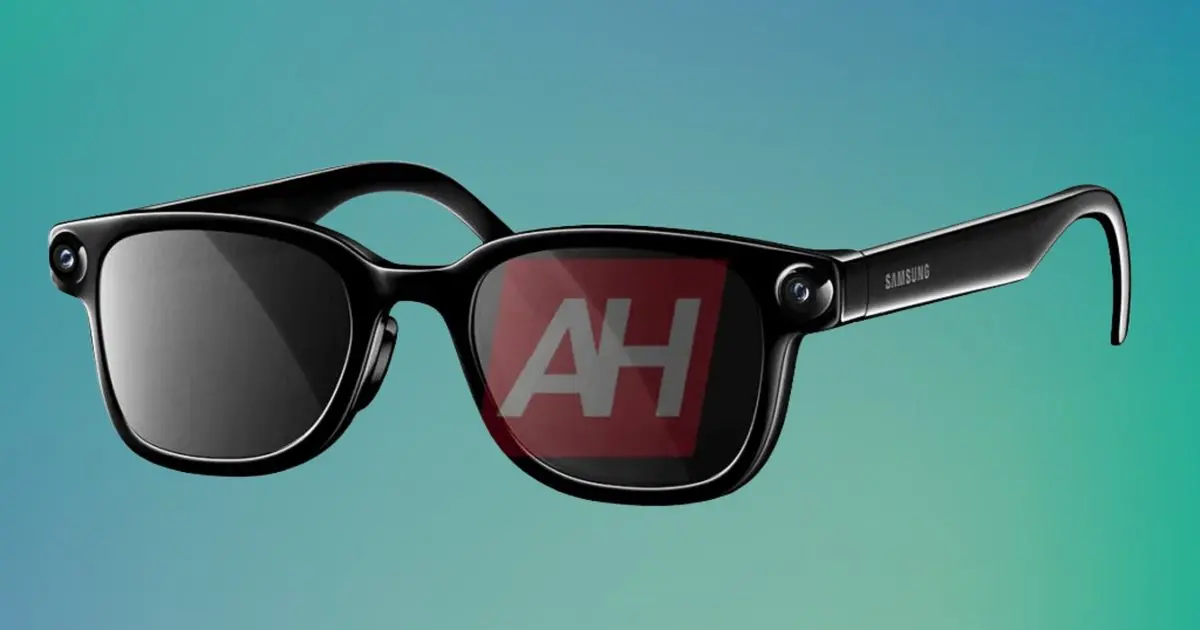
Samsung is preparing to showcase its long-rumored smart glasses at the next Galaxy Unpacked event in London on July 22, according to a report from Seoul Economic Daily. The wearable, tentatively named Galaxy Glasses, is expected to debut alongside the Galaxy Z Fold8, Galaxy Z Flip8, and the Galaxy Watch9 series, placing AI-powered eyewear near the center of the company’s summer launch strategy. This move signals Samsung’s ambition to extend Galaxy AI from the phone into a wearable form factor that can be worn throughout the day.
For users, the shift is significant. Galaxy AI has so far been limited to unlocking a phone or tapping an icon. With smart glasses, the AI could become ambient — always listening, always seeing, and always ready to assist without requiring the user to pull out a device. This hands-free approach relies on voice commands, cameras, and Samsung’s extensive connected-device ecosystem to process tasks in real time.
What Galaxy Glasses Are Expected to Do
According to the report, Galaxy Glasses will not feature a built-in display. Instead, the device will rely on a camera, microphones, and speakers to handle interactions. This makes it a voice-first wearable, where Gemini, Google’s advanced AI model, analyzes what the wearer sees and returns answers through audio feedback. The lack of a display keeps the hardware lighter and less obtrusive, making it suitable for public wear — a key consideration for mainstream adoption.
Google has already demonstrated Android XR glasses handling tasks such as turn-by-turn directions, message reading, calendar management, photo identification, and live language translation. The company also named Gentle Monster among the eyewear partners working on Android XR glasses, which aligns with reports that Samsung is collaborating with the fashion-forward brand for the design of Galaxy Glasses. This partnership suggests Samsung is aiming for a stylish, comfortable frame that appeals to a broad audience rather than just tech enthusiasts.
Why Samsung Is Moving Beyond Phones
Samsung’s strongest advantage in the smart glasses market is its vast ecosystem. Galaxy Glasses are expected to connect seamlessly with Samsung’s Galaxy smartphones, SmartThings platform, home appliances, and even future car-to-home features developed with Hyundai and Kia. The practical vision is direct: a user could look at an object, ask a question, and route the answer or action to a phone, an appliance, a smart home routine, or a vehicle setting.
This kind of integration only works if the connections feel instant and reliable. Smart glasses cannot live on demos alone; they must deliver consistent, low-latency performance in everyday scenarios. Samsung’s experience with connected devices, from phones to refrigerators, gives it a head start in building a cohesive experience that spans multiple touchpoints.
Android XR and the Software Foundation
Galaxy Glasses will run on Android XR, a platform developed by Google specifically for augmented reality and mixed reality wearables. Android XR provides a standardized software layer that allows developers to build applications for a range of devices, from lightweight smart glasses to full headsets. The platform includes support for spatial computing, gesture recognition, and advanced AI integration through Gemini.
Google has already begun courting developers to create experiences for Android XR, and Samsung’s entry is expected to accelerate that ecosystem. With millions of Galaxy phone users already familiar with Google services and Samsung’s One UI, the transition to a wearable that leverages the same accounts and data could be frictionless. This synergy is a key selling point for existing Samsung customers who might be hesitant to adopt a new device from a different ecosystem.
Design and Comfort: The Gentle Monster Collaboration
Reports indicate that Samsung is working with Gentle Monster, the high-end eyewear brand known for its bold designs and celebrity endorsements. Gentle Monster has already partnered with Google on Android XR glasses, which appeared at Google I/O 2024. The collaboration suggests that Galaxy Glasses will prioritize style, comfort, and durability — essential factors for a device meant to be worn for extended periods.
The smart glasses are expected to come in multiple frame shapes and colors, with options for prescription lenses. This approach mirrors what Meta has done with its Ray-Ban Stories and Ray-Ban Meta glasses but aims to differentiate through tighter ecosystem integration and AI capabilities.
Comparing Galaxy Glasses to Competitors
The smart glasses market is heating up. Meta’s Ray-Ban Meta glasses have found success as a camera and audio wearable, with limited AI features. Apple’s Vision Pro, while technically impressive, is a full AR/VR headset that costs $3,500 and is not designed for all-day wear. Samsung’s approach — a lightweight, voice-first wearable with no display — occupies a middle ground that could appeal to consumers who want AI assistance without the bulk of a headset.
Unlike Meta’s glasses, which rely on Meta AI and integration with the Meta ecosystem, Galaxy Glasses will leverage Gemini and Android XR, giving them access to a wider range of Google services and third-party apps. This could be a significant advantage for users who are already invested in Google’s ecosystem.
Challenges and Open Questions
While the July reveal should answer many buyer questions, several uncertainties remain. Battery life is a critical concern for a device that must last through a full day of intermittent use. Samsung has not disclosed battery capacity or expected usage time. Privacy indicators, such as an LED light when the camera is active, and clear recording controls will be essential to avoid social friction and legal issues. Prescription support is another must-have for many potential users.
Pricing will also be a deciding factor. Meta’s Ray-Ban glasses start at $299, and Samsung will need to match or beat that price to gain traction. Launch regions will determine initial availability; a global rollout may take months. Finally, the overall user experience — how quickly the glasses wake, how accurate the AI is, and how well they handle different lighting conditions — will shape whether Galaxy Glasses feel like a finished product or a developer prototype.
The Road to July 22
With less than three months until the anticipated launch, Samsung is likely finalizing hardware and software. The company has a history of showcasing ambitious prototypes at Unpacked events, from rollable phones to transparent displays. Galaxy Glasses represent a more pragmatic step: a wearable that extends the company’s AI strategy into a form factor that has yet to find mass-market success.
Success will depend on execution. Samsung has the reach, the ecosystem, and the partnerships to make smart glasses a viable product category. July will reveal whether the execution matches the ambition. For now, the industry is watching closely as Samsung prepares to add a new accessory to the Galaxy family, one that could redefine how users interact with AI on a daily basis.
Source: Digital Trends News