

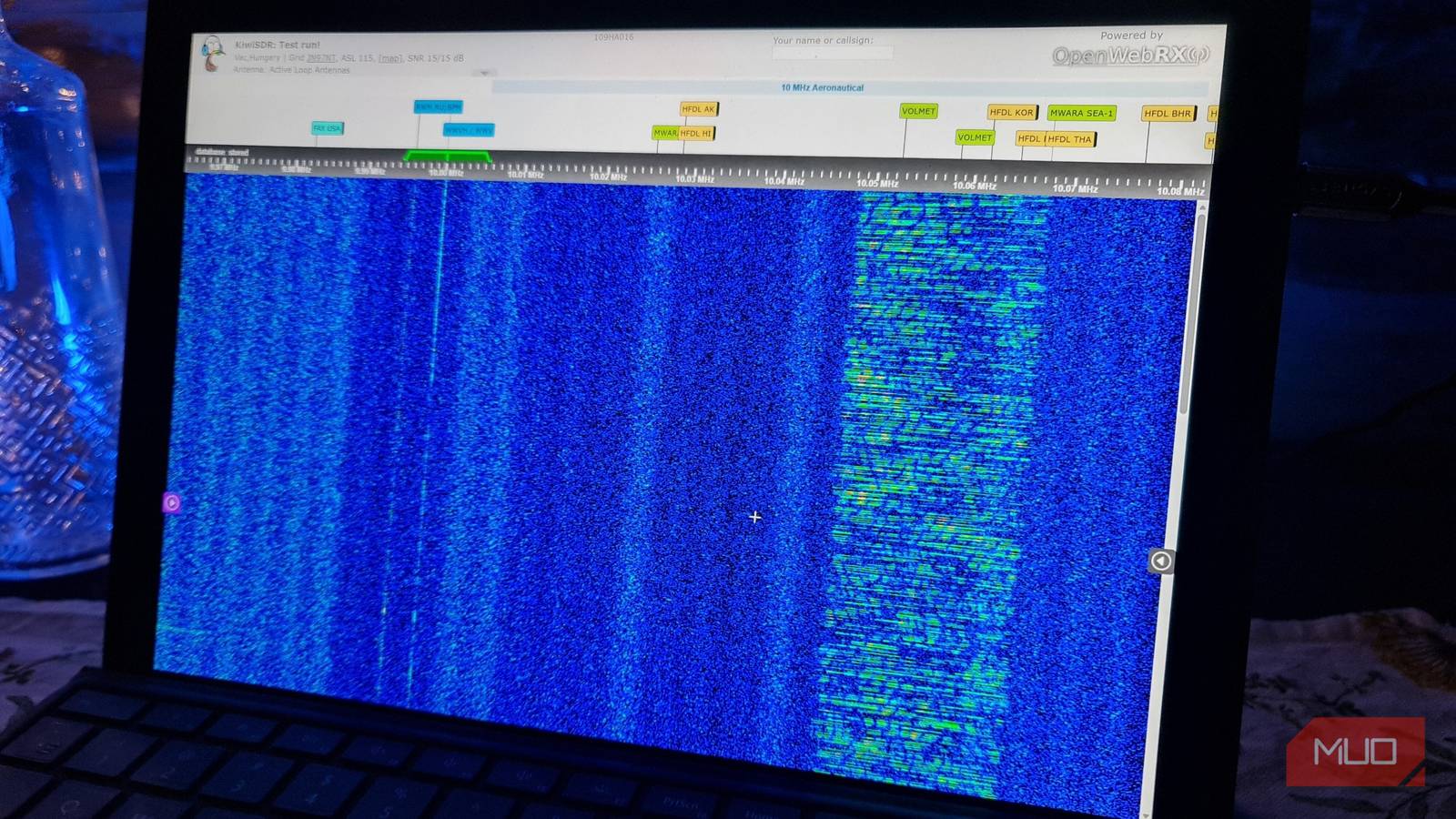
Shortwave radio has always had a peculiar allure, a mix of raw technology and lingering mystery that modern internet services rarely match. Unlike local FM or VHF, shortwave signals bounce off the ionosphere and travel thousands of miles, allowing a listener in one country to pick up broadcasts from another continent. This long reach has given rise to numerous strange signals—some are understood to be military or utility transmissions, while others remain stubbornly unexplained. With the rise of web-based Software Defined Radios (SDRs), anyone can now explore these signals without buying expensive equipment or installing a massive antenna.
The Buzzer: UVB-76
The most famous shortwave mystery is the Russian Buzzer, also known as UVB-76. Broadcasting on 4625 kHz in Upper Sideband (USB) mode, it emits a repetitive, droning buzz that can be heard 24/7. Many new listeners are disappointed to find it's just a monotone noise, but the fascination lies in its unknown purpose. The signal has been tracked since the 1970s and is believed to be a Russian military channel. Occasionally, the buzzing is interrupted by a Russian voice transmitting brief messages or even fragments of music—like the famous 2010 incident when Swan Lake was played. The station has changed callsigns multiple times and its exact location remains a matter of speculation. To hear it, use a KiwiSDR online and tune to 4625 kHz in USB mode.
Skyking: Do Not Answer
The phrase "Skyking, do not answer" is legendary among radio enthusiasts. It's part of the US High Frequency Global Communications System (HFGCS), used for encrypted high-priority broadcasts. When a "Skyking" message is sent, it instructs all listening stations to remain silent and not respond over the air. These transmissions are often accompanied by Emergency Action Messages (EAMs). Common HFGCS frequencies include 4724, 8992, 11175, and 15016 kHz, all in USB mode. While you can hear test counts and routine traffic, catching a Skyking broadcast requires patience. Recordings from early webSDRs show these transmissions typically begin with a series of tones followed by a calm voice reading coded alphanumeric groups.
The Pip and The Squeaky Wheel
Alongside the Buzzer, Russia operates two other odd signals: The Pip and The Squeaky Wheel. The Pip transmits on 5448 kHz during daylight and 3756 kHz at night, producing a steady pip sound reminiscent of a metronome. Like the Buzzer, it occasionally carries Russian voice messages. The Squeaky Wheel lives on 5367 kHz (day) and 3363.5 kHz (night) and emits a two-tone high-pitched squeak that quickly becomes irritating. Both are believed to serve military or diplomatic functions, though their exact purpose is unclear. Listeners often monitor these stations for changes in pattern, which may indicate an impending message.
Number Stations: Voices in the Ether
Perhaps the creepiest category of shortwave signals is the number stations—broadcasts of seemingly random numbers or letters read in a monotone voice. These are widely assumed to be one-way communications to intelligence operatives, using a one-time pad cipher. Stations such as HM01 (Cuban) and E11 (English-language, also called Oblique) are still active. HM01 transmits on frequencies like 9330, 10345, 11435, and 11530 kHz in AM mode, mixing Spanish voice groups with digital data bursts. E11 broadcasts on a weekly schedule: Monday–Wednesday on 8102 and 12630 kHz, Tuesday–Thursday on 12385 and 13470 kHz, and Friday–Sunday on 7850 and 8680 kHz, always in USB mode. The calm, deliberate delivery of numbers is unsettling because it implies a hidden infrastructure of intelligence work that remains invisible to the public.
Time Signals: The Boring but Useful Stations
Not all shortwave signals are mysterious. The US time station WWV broadcasts on 2.5, 5, 10, 15, and 20 MHz in AM mode, providing accurate time announcements and clock ticks. Similarly, Canada's CHU operates on 3330, 7850, and 14670 kHz. These stations are reliable and serve as excellent baselines for learning to navigate the shortwave spectrum. Once you recognize what a standard utility signal looks like on a waterfall display (a steady carrier with sidebands for audio), it becomes easier to spot the truly anomalous transmissions.
Why Shortwave Still Captivates
After spending evenings jumping between SDRs in different continents, listening to buzzers, pips, squeaks, and number stations, one realizes that the real appeal is the blend of technical curiosity and enduring mystery. Unlike recorded folklore, these signals are live—they are being transmitted at this moment, reaching antennas across the globe. Organizations like Priyom.org meticulously catalog schedules and recordings, helping enthusiasts track active stations. The thrill comes from knowing that somewhere, someone (or something) is sending these signals, and we can listen in real time. The unexplained nature of many transmissions keeps the mystery alive, making shortwave radio a unique portal to a world that is both practical and otherworldly.
Source: MakeUseOf News